

La source de mon travail se trouve dans les rituels quotidiens et ancestraux, les
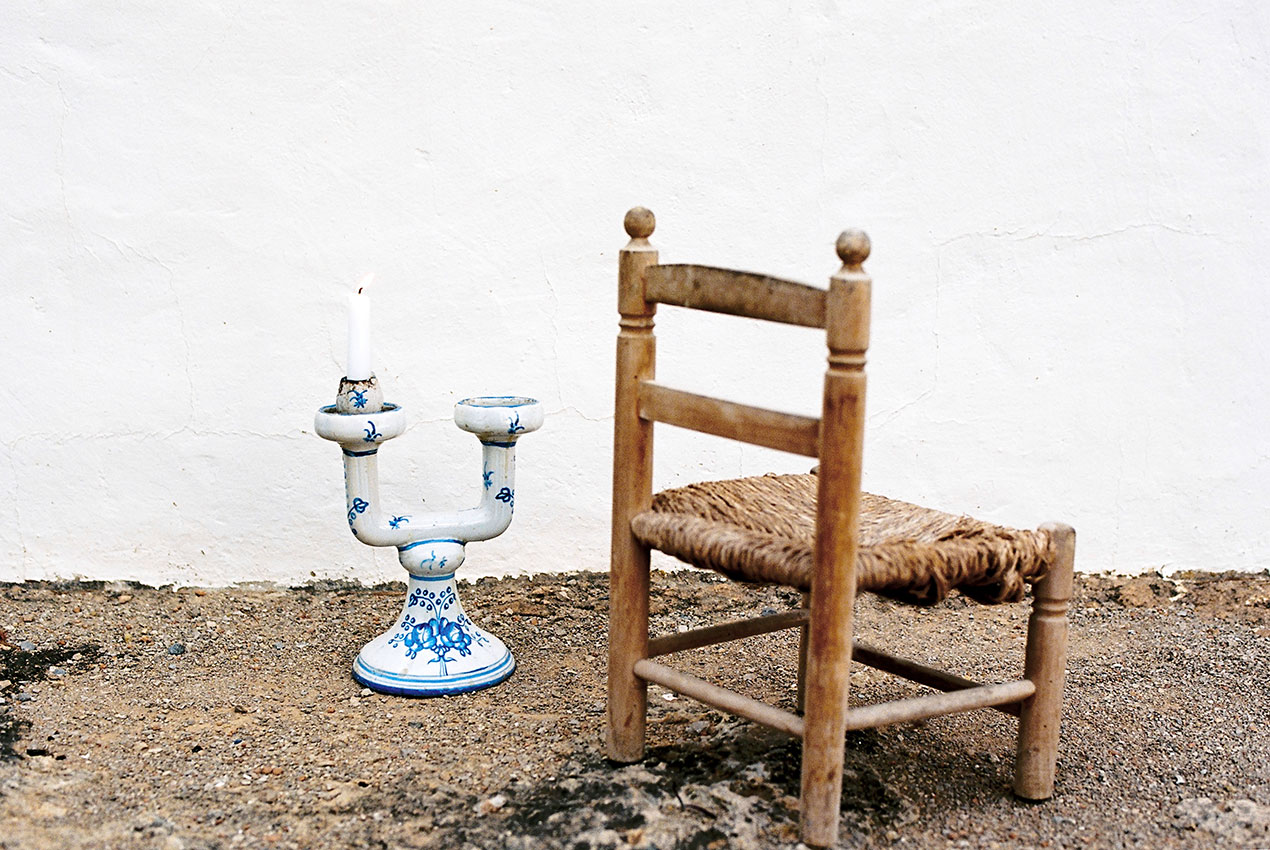
superstitions et les traditions de l’espace méditerranéen. Je formalise mes recherches à travers la photographie, la vidéo, le textile et la sculpture. Mes installations réunissent divers éléments : photographies, objets votifs, costumes et accessoires, structures autoportantes, transferts et projections - vers des espaces imaginaires emprunts d’éléments affectifs, utopiques, symboliques et volontiers carnavalesques.
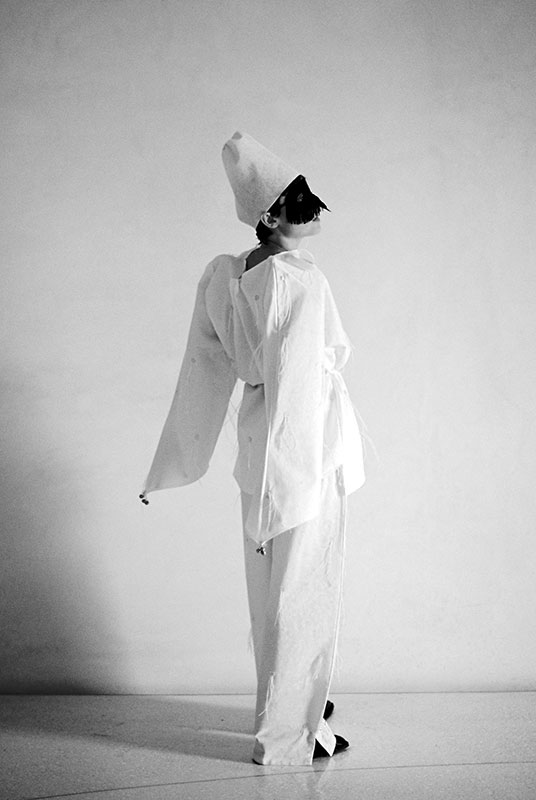
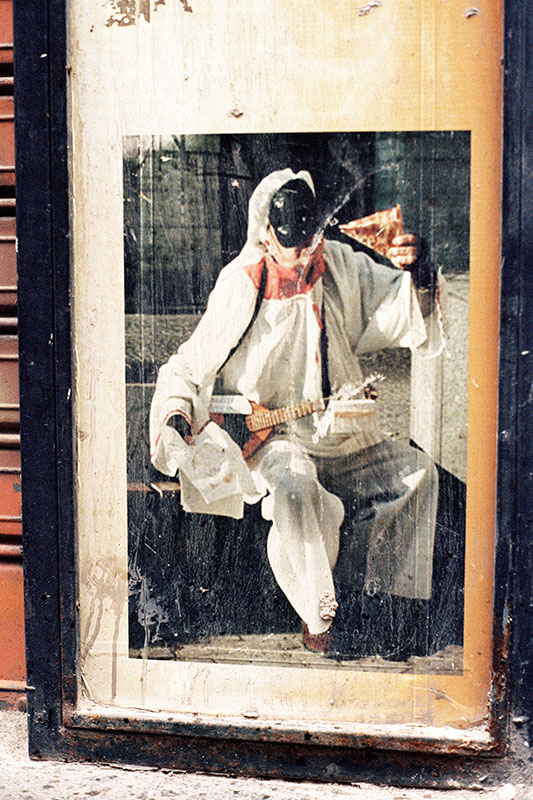
Avec une grand-mère espagnole et voyante, j’ai grandit bercée par les histoires surnaturelles du Sud. J’alimente un travail de l’image documentaire, que je confronte ensuite à l’imaginaire des sorcières, chimères et des contes empruntés à l’enfance et au fantastique. Tout un monde peuple mon corpus d’images et de récits - les bien connus Polichinelle et Arlequin de la Commedia dell’Arte mais aussi les figures mythologiques que sont la sirène, le monstre ou le marin, ou populaires, que sont le diable, le magicien, le clown et le berger. On retrouve aussi des figures spirituelles, comme l’enfant-divin ou le fantôme. Ils forment une troupe, un banquet, et me permettent de révéler la part de fiction et de spectacle présents dans le quotidien, quitte à truquer le réel.
Ainsi je navigue entre les frontières poreuses des antagonismes - profane et sacré, matériel et spirituel, terrestre et céleste - et travaille à des propositions visuelles favorisant un réenchantement, à l’instar des cirques, des cabanes et des scènes de théâtre.
Profondément imprégnée par l’oralité, l’esthétique baroque et les objets de la culture populaire, je souhaite maintenir éveillées les mémoires, les croyances et les histoires qui nous lient. Cette quête de la (re)construction du lien social est au cœur de ma démarche ; je documente des usages, collecte des objets et des témoignages, j’expose l’immatériel et le collectif. Je souhaite aborder la notion de tradition comme vecteur d’un socle commun à l’humanité plutôt que de particularismes locaux. J’interroge ainsi, en filigrane, l’ambivalence de certaines pratiques ritualisées - dans des contextes souvent liés au tourisme - et tente de repenser ces usages et modes de diffusion actuellement, en élargissant les perspectives et en créant de nouvelles formes contemporaines. Comme le prédisait Joseph Beuys, le folklore permet de naviguer entre présent, passé et futur. Et un lien commun unit toutes les superstitions : celui d’une conscience poétique du monde.
2024/
— (à venir) Rouvrir le monde – Au centre social AIR BEL, dans le cadre de l’Été Culturel, avec le soutient de la DRAC et l’accompagnement du Centre Photographique Marseille, Marseille
— (à venir) Kultursommer, programme ‘Compass Europe : Étoiles du Sud’, Marseille, Palerme (IT) et Maintz (DEU)
— Ateliers de masques avec la Galerie du 19M, Fort Saint Jean – MUCEM, Marseille
— Ateliers de costumes avec un groupe du Microlycée 94, Vitry-sur- Seine, en collaboration avec la Galerie municipale Jean Collet
2023/
— Rouvrir le monde – Résidence séniors Les Girandières, dans le cadre de l’Été Culturel, avec le soutient de la DRAC et l’accompagnement du Centre Photographique Marseille, Marseille
2022/
— Nouveau Grand Tour – Programme conçu par l’Institut Français d’Italie (IFI) / Ambassade de France en Italie. Séjour d’un mois au Palazzo Butera, Palerme (IT)
2024
— Le Couvent, Marseille – Ce qui se loge dans les losanges / Duo avec Romain Kloeckner, dans le cadre du Printemps de l’Art Contemporain OFF / Commissariat : Romain Pottier
— Centre Photographique Marseille – À l’œuvre #3 / Dans le cadre du Printemps de l’Art Contemporain
— (à venir) Galerie Municipale Jean Collet, Vitry-sur-Seine – Art en action
— (à venir) KWR40, Maintz (DEU) – Duo avec Alina Roebke
— (à venir) Lieu à définir, Paris – Exposition collective / Commissariat : Mathilde Badie
2023/
— 67e Salon de Montrouge / Commissariat : Work Method
— Biennale de la Joliette, Marseille – Restitution de résidence au Panificateur, en partenariat avec le Centre Photographique Marseille et le Frac Sud
— Ateliers de la ville de Marseille, Carmela (exposition personnelle) / Commissariat : Isabella Seniuta
2022/
— Fondation Manuel Rivera-Ortiz, Arles – Dress Code / Dans le cadre des 5 ans du festival Premiers Films et des Rencontres d’Arles
— Le PRéavIE, Le Pré Saint-Gervais – Parade / Commissariat : Louise Lan Millot et Clément Bouissou
— Grande halle de La Villette, Paris – 100% L’EXPO / Commissariat : Inès Geoffroy
— Centre Photographique Marseille – La Relève 4, dans le cadre du festival Plateforme Parallèle
— Grandes serres de Pantin – Bureau d’investigation du sacré / Commissariat : Jeanne Mercier
2020/
— École des Arts Décoratifs, Paris – Sacré dans le cadre de la Chair « La jeune création et le Sacré » / Commissariat : Stéphane Degoutin et Natasha Lesueur
2019/
— Galerie 13, Paris – DOKU SOAP / Commissariat : Alain della Negra
— Fest;tisztít Galéria, Budapest (HU) – Senza i più
2024/
— (à venir) Macaronibook – Publication d’une monographie
2023/
— MadeInBed Magazine – Interview par Clara Eugène
— Catalogue d’exposition du 67e Salon de Montrouge / Graphisme : AletheiaWorks
— ACV Magazine – TRADITION 02 (Cover + CARMELA series)
— Beaux Arts Magazine – « Asia Now, AKAA, Offscreen, Montrouge, Paris Internationale… Nos plus belles découvertes 2023″
— Time Out Paris – « 4 expositions qui convoquent fantômes et esprits, de la Bourse de Commerce au Salon de Montrouge »
2022/
— Manifesto XXI – « La Relève 4 : Une jeunesse qui nous tient en éveil »
— Les Presses du Réel – « Bureau d’investigation du sacré »
— Catalogue des résidents du Nouveau Grand Tour
— Catalogue d’exposition de 100% l’EXPO, La Vilette
— 9 Lives Magazine – « 100 % l’Expo, 100 % gagnant ! »
— En revenant de l’expo – « La Relève 4 »
2021/
— Hypothèses, « Réalisations vidéo des étudiant.e.s de l’ENSAD »
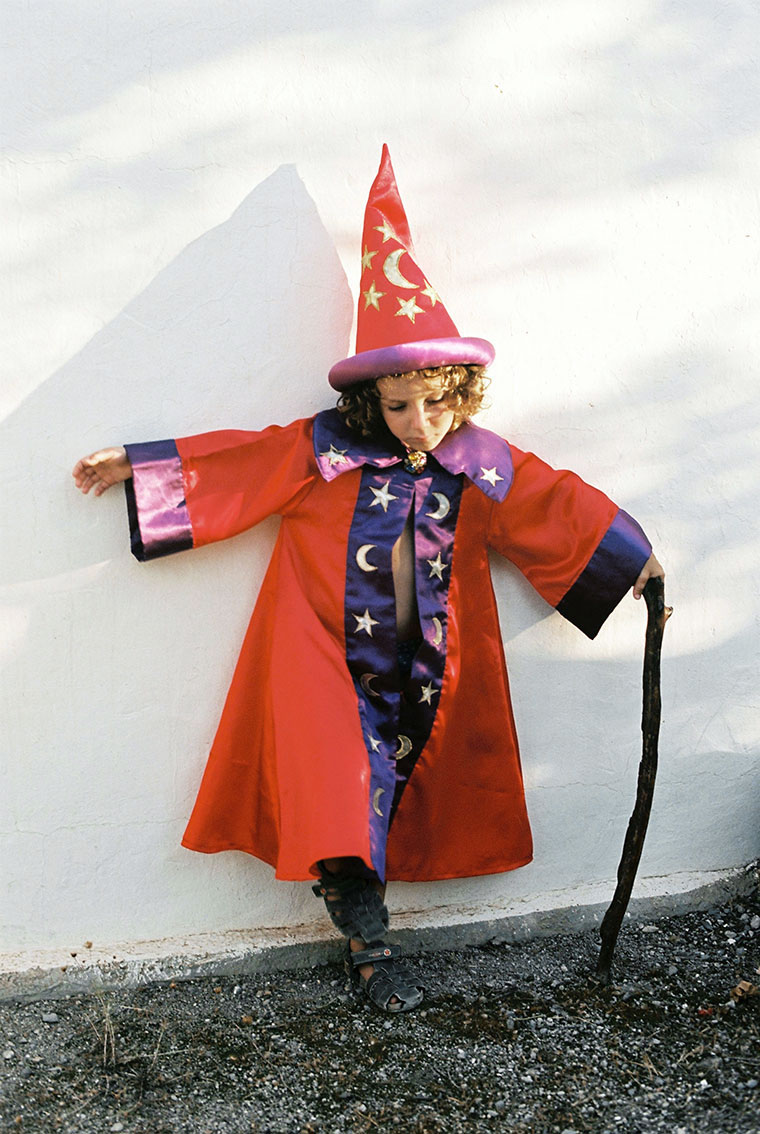
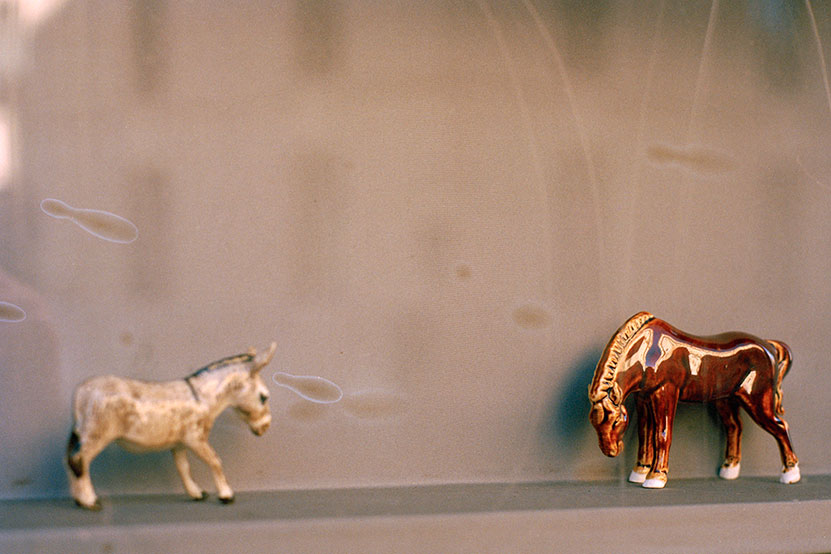
¡ BAILA MARIA !, 2020
— 67e Salon de Montrouge (Paris, France) – Espace Colucci, projection
— Ateliers de la ville de Marseille (Marseille, France) – Projection
— FIFIG (Groix, France) – Compétition Courts-métrages
— Cinéma du Réel (Paris, France) – Centre Pompidou – Première Fenêtre
— Festival Hors Pistes (Paris, France) – Centre Pompidou – Post Prix de Si Cinema
— Si Cinema (Hérouville Saint-Clair, France) – Compétition
— Grande halle de La Villette (Paris, France) – Projection
— Fondation Manuel Rivera-Ortiz (Arles, France) – Projection
— Le PRéavIE (Le Pré Saint-Gervais, France) – Projection
— FolFilmFestival (Paris, France) – Ecole des Arts Décoratifs
— Festival PremiersFilms (Malakoff, France) – Dans le cadre de la Nuit Blanche à la Maison des arts — Centre d’art contemporain de Malakoff
HAPPY SAFARI, 2016
— Vidéoformes (Clermont-Ferrand, FR) – Video Art Academy
‘Bercée par les histoires empreintes de superstitions et de surnaturel que lui contait sa grand-mère espagnole et voyante, Emma Tholot construit un univers fantastique où se croisent magiciens, sirènes, fantômes et enfant divin. Ces figures archétypales sont les pro- tagonistes d’un corpus de récits qu’elle met en scène dans des installations protéiformes. Alors que la photographie et la vidéo sont les moyens privilégiés de son exploration artis- tique, son vocabulaire plastique s’enrichit de collages, de sculptures ou encore d‘œuvres sur tissu, qui se déploient dans des dispositifs scénographiques inspirés du théâtre.
Sa passion pour les traditions orales et la culture populaire l’amène à explorer et à interroger la permanence des rituels dans notre époque contemporaine. Elle s’intéresse plus particulièrement aux bals sur les rives de la Méditerranée, et notamment à Ibiza (sa terre familiale).
Munie de son appareil photographique argentique, Emma Tholot étudie avec l’acuité d’une ethnographe et la sensibilité d’une plasticienne les costumes, les bijoux, les coiffures et les broderies. À partir de cette collecte presque documentaire, l’artiste imagine des ré- cits intimes et sensibles qui flirtent avec le mythe. Dans la série Carmela (2022-en cours), l’artiste met par exemple en scène la nourrice de sa grand-mère, qui échappa à un mariage forcé grâce à des ailes en cire… Avec finesse et poésie, l’artiste sonde l’ambivalence de ces rituels ancestraux en donnant à voir l’envers du décor de ces cérémonies folkloriques, qui perpétuent une vision patriarcale de la société. La beauté des bijoux et des costumes ne doit pas faire oublier la hiérarchie des sexes, que mettent en scène des chorégraphies où les jeunes hommes « galopent » autour des jeunes femmes à conquérir.
À la fois légende familiale et récit d’émancipation, Carmela prend la forme d’une ins- tallation réunissant une grande diversité de médiums, qui se répondent les uns les autres. Il y a les photographies de mains en gros plan, recouvertes de bagues en or ou en argent ; il y a les photographies mises en scène et transférées sur de la cire récupérée dans les églises ; il y a des textes brodés sur des tentures ; des passementeries ; des médaillons aux allures d’ex-voto ; des grelots… Emma Tholot collecte les détails d’un décorum qu’elle recompose et rejoue à travers des dispositifs scénographiques inspirés du théâtre de rue, en passant du documentaire à la fiction et de la réalité au conte. C’est comme si nous entrions dans les coulisses d’une pièce prête à être jouée, et où se lit la présence fantoma- tique de son personnage principal : Carmela.
Au-delà de sa fascination première pour le folklore et les croyances populaires qui peuplent les bords de la Méditerranée, Emma Tholot interroge la hiérarchie des sexes telle que ces cultures la performent lors des rites de passage. L’artiste célèbre la résistance et le pouvoir de subversion des femmes à travers les histoires qu’elles racontent de génération en génération, comme pour conjurer le mauvais sort de la domination masculine.’
Sonia Recasens, dans le cadre du 67ème Salon de Montrouge
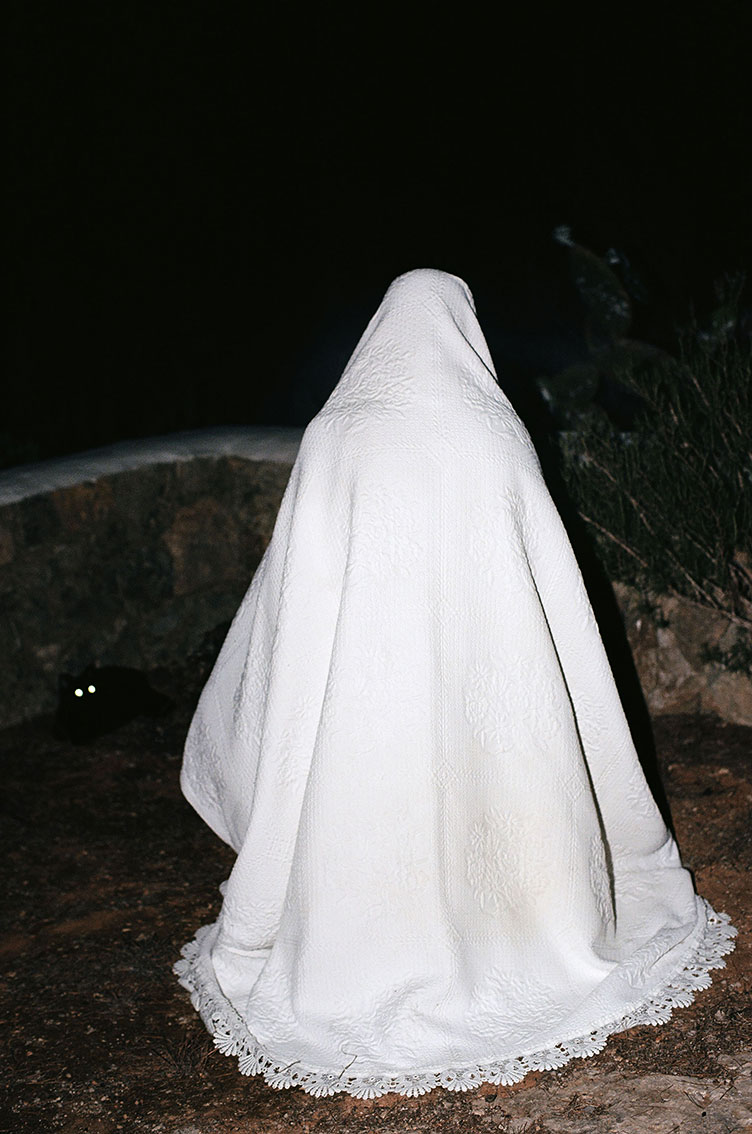
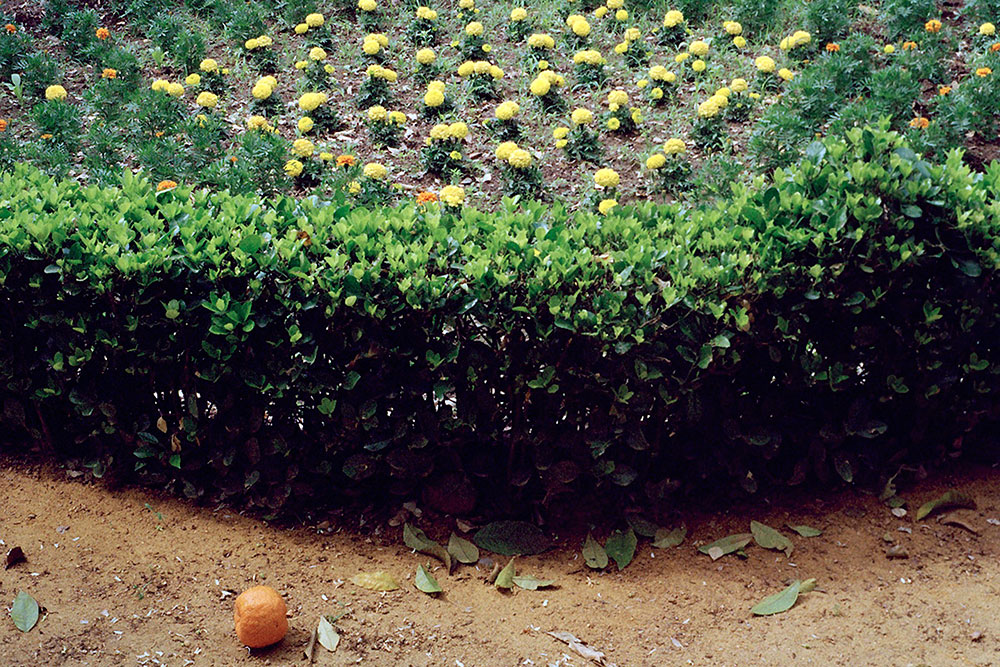
2022/
— Prix du Centre Pompidou du festival Si Cinema pour ¡ Baila Maria ! – Lauréate
2018/
— Prix européen de la photographie – Finaliste
2016 – 2020/ École des Arts Décoratifs de Paris, secteur Photo/ Video (DNSEP)
2018/ Accademia di Belle Arti di Roma, Arts visuels (Erasmus)
2013 – 2016/ École d’Art d’Annecy, secteur Design et espaces (DNAP)
2012 – 2013/ Classe Préparatoire aux Grandes Ecoles (CPGE) Sciences Po, Institution des Chartreux, Lyon
IV
Derrière le Miroir, ma mère enfant
joue dans une ruelle sèche.
Elle hume les yeux de la Madone
parmi les figuiers et les chênes frais de résine.
Avec le collier de corail,
elle s’encourt, contente, sur les talus,
dans une lueur de vie de mil
neuf cent deux, dans un soupir…
Pier Paolo Pasolini, Dans le coeur d’un enfant – Tal còur di un frut, 2000
Website + code : Aurélie Defez